Too hot to taste chocolate? Sit back and take the Appreciation of Fine Chocolate on-demand video course, a fascinating guide to the world of fine chocolate.
I thought, I knew what good chocolate was and I thought Fairtrade meant cocoa farmers were getting a better deal — I even campaigned for it when it first launched in the 1990s. I gave presentations in schools and made myself a little unpopular encouraging people to switch to Fairtrade tea, coffee and chocolate - which, if I’m honest, didn’t always taste that great - but it was all for the greater good.
I discovered Divine, Green & Black’s, and Montezuma’s — drawn in by their revolutionary approach to sourcing and ethics. I even started buying higher cocoa percentages, convinced that quality was somehow linked to the number on the label.
And for years, I thought that was it — that I was doing the right thing, eating “good” chocolate, and supporting a fairer system.
But then I had a bit of an awakening. I found a different type of chocolate.
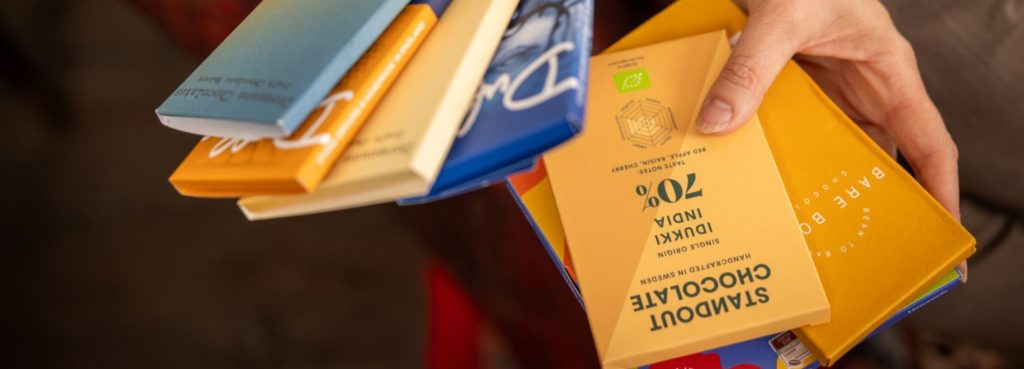
And honestly? It blew me away.
It wasn’t the ethics or the story that caught my attention at first — it was the taste. The flavours were unlike anything I’d ever had before. I was tasting dark chocolate bars from different origins with no bitterness but different flavour notes in each one - all from nothing but cocoa beans and sugar.
That “wow” moment completely changed how I thought about chocolate. I suddenly realised how little I actually knew about what went into the bar, where it came from, who was involved in making it, and how little Fairtrade actually meant to the farmers it aims to help.
So, I wanted to learn everything I could. I started reading, tasting, asking questions — and eventually I found the IICCT chocolate tasting courses. What began as curiosity turned into a bit of an obsession, but a good one!
Before long, I was teaching others how to taste chocolate — friends and enthusiasts at first, and then professionals, anyone who wanted to really understand chocolate rather than just consume it.

There are still so many people who proudly tell me they always buy Fairtrade because they believe that’s the best they can do — and why wouldn’t they, if they’ve never been introduced to anything better - for flavour and ethics?
What’s more frustrating though, is hearing food professionals praise industrially produced chocolate, with its limited and sometimes even downright unpleasant taste experience — as if it represents the best there is. It’s hard to believe that so many of them have still never discovered the depth, diversity, and taste experience of craft chocolate but this still seems to be the case and as a community we are trying hard to change this.
One of the ways I am helping is by creating a short on-demand course: An Appreciation of Fine Chocolate.

If you are looking for better chocolate, a micro-learning course - with the option to add a tasting box - will give you the knowledge and some simple tools to help you understand what good chocolate really is, not just what the marketing says it is.
This is just an introduction. You can go on to explore and dive deeper with professional courses, or connect with makers and retailers who can guide you further. But by taking the course you’ll know what you are buying, what better chocolate really is and what it can offer when you taste it. It will give you knowledge - and hopefully a curiosity - about the people, places and processes behind it.
That’s the gift I would like to give.
Curious to learn more?
Visit my listings on the Cademy online education site to explore the on-demand courses and discover how to taste, understand, and enjoy chocolate like never before. Link to Cocoa Encounters Cademy Site for Bookings and Vouchers
When introducing people to the flavour experience of craft chocolate, I feel it's quite unfair to compare it to a dark confectionery bar like Bournville. Yet in the new Cadbury campaign — “Unpretentious, uncomplicated, made to be enjoyed (not endured)” they deliberately contrast their simple and crucially sweet Bournville bar with the complexities of craft chocolate.
Clearly, it’s time to go back to basics and redefine chocolate.
The team behind the Bournville campaign are working on the assumption that for most of us, chocolate means one of two things: the sweet, familiar kind, comforting, nostalgic, and easy to love, usually found in the confectionery aisles – or the serious dark stuff - intense, bitter, ethical and a little pretentious in its claims.
But craft chocolate is a third category entirely.
It's a new tier of chocolate: generally absent from supermarkets, less visible, and as the Cadbury campaign illustrates, often mistakenly confused with the intense, “pretentious” premium dark variety.
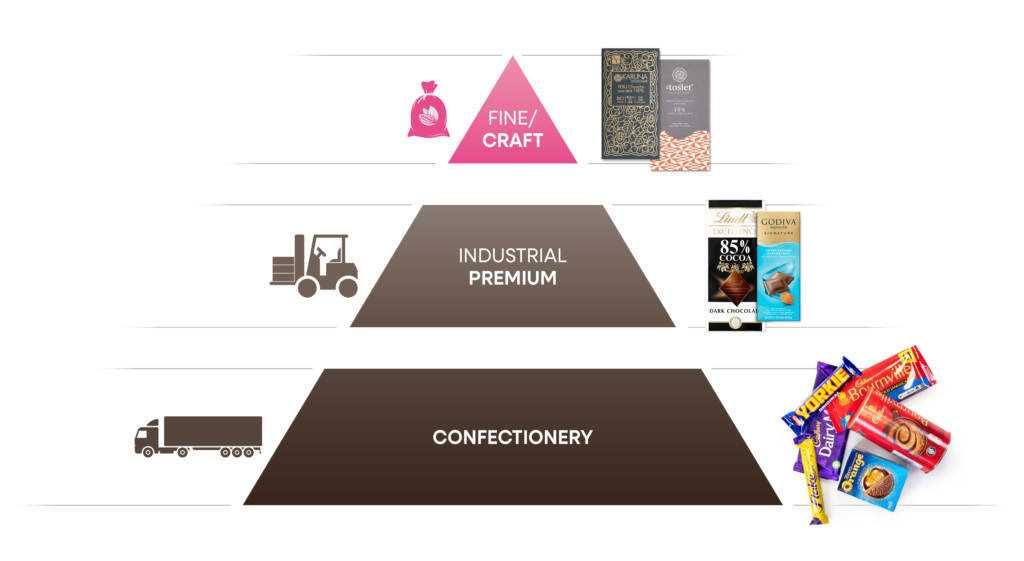
So here’s Chocolate, Redefined using the criteria of Taste, Transparency and Craftsmanship.
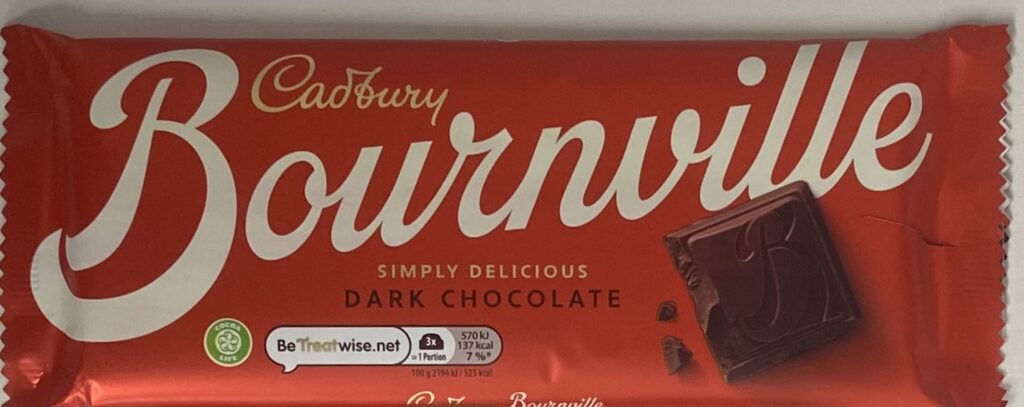
Let’s start with what we know best - confectionery, here in the classic form of Cadbury Bournville, first launched in 1908 and named after Bournville town, - once a model of corporate responsibility.
Taste: Simple, sweet and nostalgic. But I challenge you to really taste it and decide for yourself how delicious it really is. For me there’s a strong aroma of desiccated coconut with a taste that appeals to your sweet tooth but it's fatty and dominated by that lingering coconut and something resembling old oil.
Transparency: A Mondelez “Cocoa Life” badge and a promise of "sustainably" sourced cocoa. The basics and arguably more a reassurance device than an act of social reform.
Craftsmanship: Industrially manufactured from 36% cocoa solids. Sugar is the first ingredient, palm oil is the third and milk powder is the last!
Chocolate in dark form but made for sweet cravings.
Price: 180g bar £3.00 for (£1.66 per 100g)
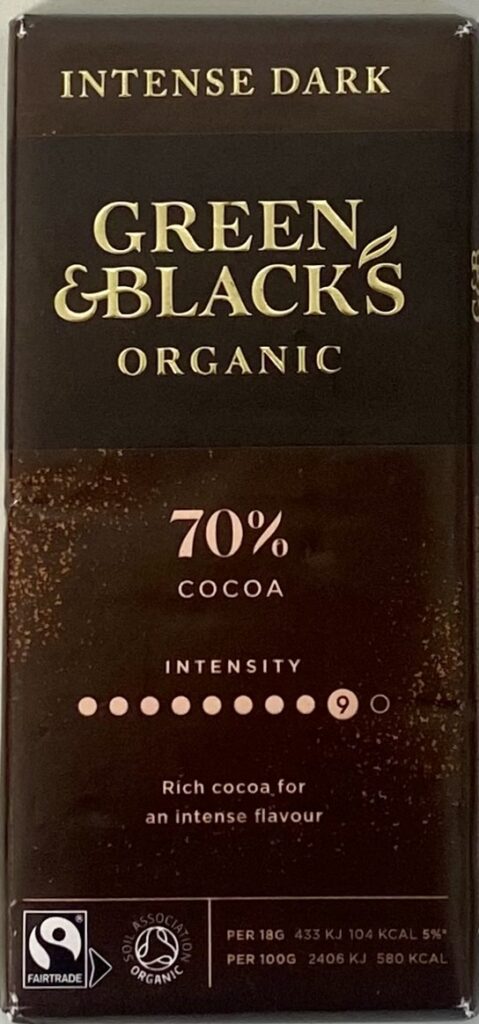
Next, a step up - Green & Black’s, also owned by Mondelez. The first UK Fairtrade chocolate bar, once celebrated for introducing dark chocolate with principles, it now markets intensity levels, with its organic and Fairtrade status quietly relegated.
Taste: So now we can taste the cocoa beans but mainly their bitterness, tamed by the vanilla extract making it dark yet approachable.
Transparency: Once sourced from a cooperative of small holders in Belize, it is a blend from that premium pool of organic and Fairtrade beans with no mention of origin.
Craftsmanship: Made with beans “dried in the scorching sun” indicating more marketing gloss than skilled post-harvest practices - where scorched beans would be most unwelcome! Still industrial, though with fewer ingredients and vanilla to soften the bitter edges.
Chocolate made to appeal to our better nature.
Price: 90g £3.00 from Co-op, (£3.33 per 100g)
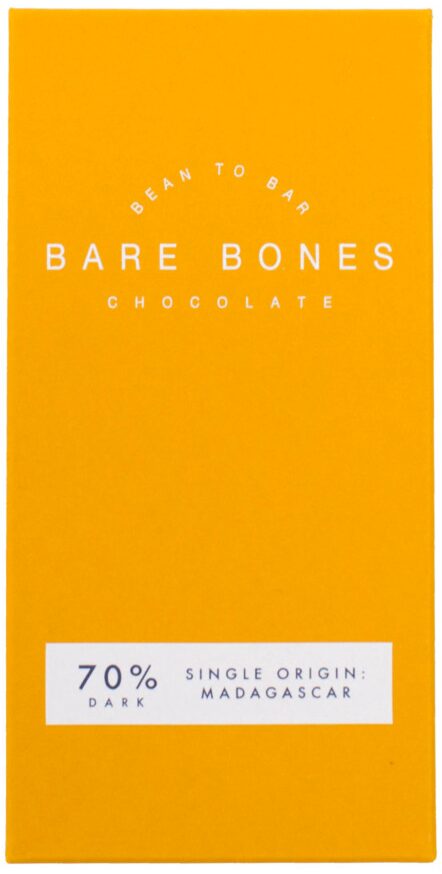
Then there’s chocolate that changes everything.
Bars like Bare Bones Madagascar have a new story to tell. Not a story of corporate take-overs, generic sourcing and low impact sustainability but one of beans grown and crafted with respect for both the producer and the consumer.
Taste: Not bitter but fruity and vibrant, with flavour notes that evolve, the bright fruits mellowing and deepening into brownie and dark sugar tones. The taste of the beans themselves.
Transparency: Cocoa beans sourced from a specific cooperative of 47 shareholder farmers with the bean to bar process done in a small-scale chocolate factory in Glasgow.
Craftsmanship: Wooden box fermentation and sun-drying on patios at origin and a true bean-to-bar process, expressing the natural flavour of the beans with only three ingredients.
Chocolate made to be tested, and appreciated by those of us with a real interest in flavour and provenance.
Price: 70g bar £7.50 from bareboneschocolate.co.uk (£10.71 per 100g)
So, if you are looking for the best, top-tier, dark chocolate or buying for someone who cares – ask three simple questions:
Taste: Am I tasting sugar, vanilla or an intense cocoa bitterness or the natural flavours of fine cocoa beans?
Transparency: Do I know where the cocoa beans are from, how they've been handled and where the chocolate was made?
Craftsmanship: Was it industrially made to reflect the brand or crafted to express the natural flavours of the beans?
Knowing about the three types of chocolate helps you cut through the marketing spin to find dark chocolate that you really can enjoy rather than endure.
Visit my listings on the Cademy online education site to explore the on-demand courses and discover how to taste, understand, and enjoy chocolate like never before. Link to Cocoa Encounters Cademy Site for Bookings and Vouchers
This is the third article in a series examining the distinctions between industrial premium chocolate and fine or craft chocolate—from flavour and sourcing to transparency and intent.
This particular comparison was sparked by a simple question someone asked me after seeing the Cox & Co logo: “Is farm to bar better than bean to bar?”
My answer, of course, was: “It all depends!”
All chocolate starts on a farm, or more often, on multiple farms, and ends up in a bar. Tracing its journey is important but how clearly that path is traced and communicated can differ significantly.
Our comparison this time focuses on two bars made with cacao grown in Colombia: a Cox & Co 71% Colombia dark; and Nicola's Chocolate 70% Colombia.
Both bars highlight origin and craft, but how deep does the traceability go—and how much does it really tell us?
First, let’s remind ourselves of the three key types of chocolate as this is our first clue to the value of their promises:
Confectionery chocolate: In our everyday chocolate, the origin of the cacao is often unknown, and largely irrelevant to most consumers. So, we are not dealing with confectionery here.
Industrial premium chocolate: A step up in price, often with selling points based on origin and sustainability. This category leans heavily on the marketing appeal of ethical claims, though what that actually offer can vary widely.
Fine (or craft) chocolate: Here, origin and sourcing are integral to the maker’s craft. The goal isn’t just ethical sourcing, it’s to bring out the unique character and flavour of the specific cocoa beans, with transparency from farm to bar.
The companies and brands themselves are our next clue.
Cox & Co presents itself as a brand with a conscience: “a treat you can feel great about enjoying.” The founder, Gavin Cox, tells us that he spent time in South America and wanted to create chocolate “as ethically as possible.”
Cox & Co is owned by Montrose Chocolate Ventures Ltd, a company that also manufactures white-label chocolate for other brands. (THE DD Team, n.d.) In other words, Cox & Co is a brand rather than a chocolate maker or manufacturer but the storytelling is compelling, and the brand positioning strong.
The traceable sourcing that Cox & Co points to, is the work of their supplier Luker Chocolate, a Colombian B Corp certified company who offer “premium” chocolate products to manufacturers. They claim to prioritise the well-being of cocoa farmers, consumers, and the environment. Luker Chocolate's cacao comes from 15,000 farmers located in the main growing areas of Colombia. They have created a sustainability platform and traceability system called Luker Trace to trace their cacao back to either farm, regional buyer or association. (Cox & Co, n.d.) According to CocoaRadar they have the goal of achieving full traceability to farm level by 2027. (Myers, 2025). You can download a copy of their 2024 Sustainability Progress Report from their website and read their progress for yourself. (Luker Chocolate, 2024)
Nicola’s Chocolate
Nicola’s Chocolate is as transparent and personal as it gets. Based in Exeter, Nicola is a one-woman chocolate maker, educator, former teacher and passionate advocate for craft chocolate. She makes her bars in small batches, from bean to bar, using fine-flavour cacao.
“I created Nicola’s: a brand that reflects my hands-on approach, my dedication to the craft, and my desire to build a chocolate community where people can connect with the process, the flavours, and the stories behind each bar,” she writes. And it’s not just marketing. Nicola has just opened a shop where customers can talk to her directly—about the beans, the farms, the flavours, and the making.
Her approach is deeply rooted in both ethics and education: “Chocolate isn’t just a sweet treat – it’s an adventure.” Her branding is very well executed and focuses on flavour, origin, and process. (Nicola's Chocolate, 2025)
Let’s look at the bars themselves.
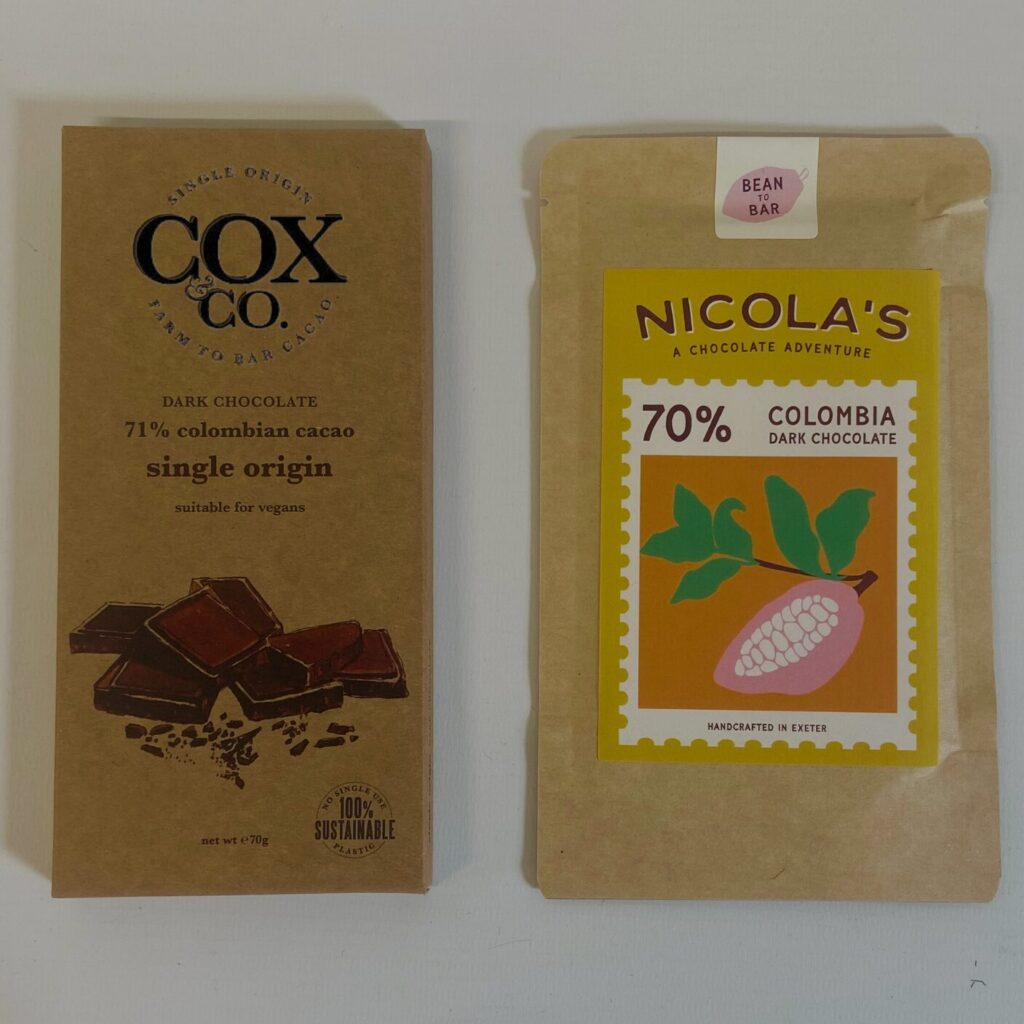
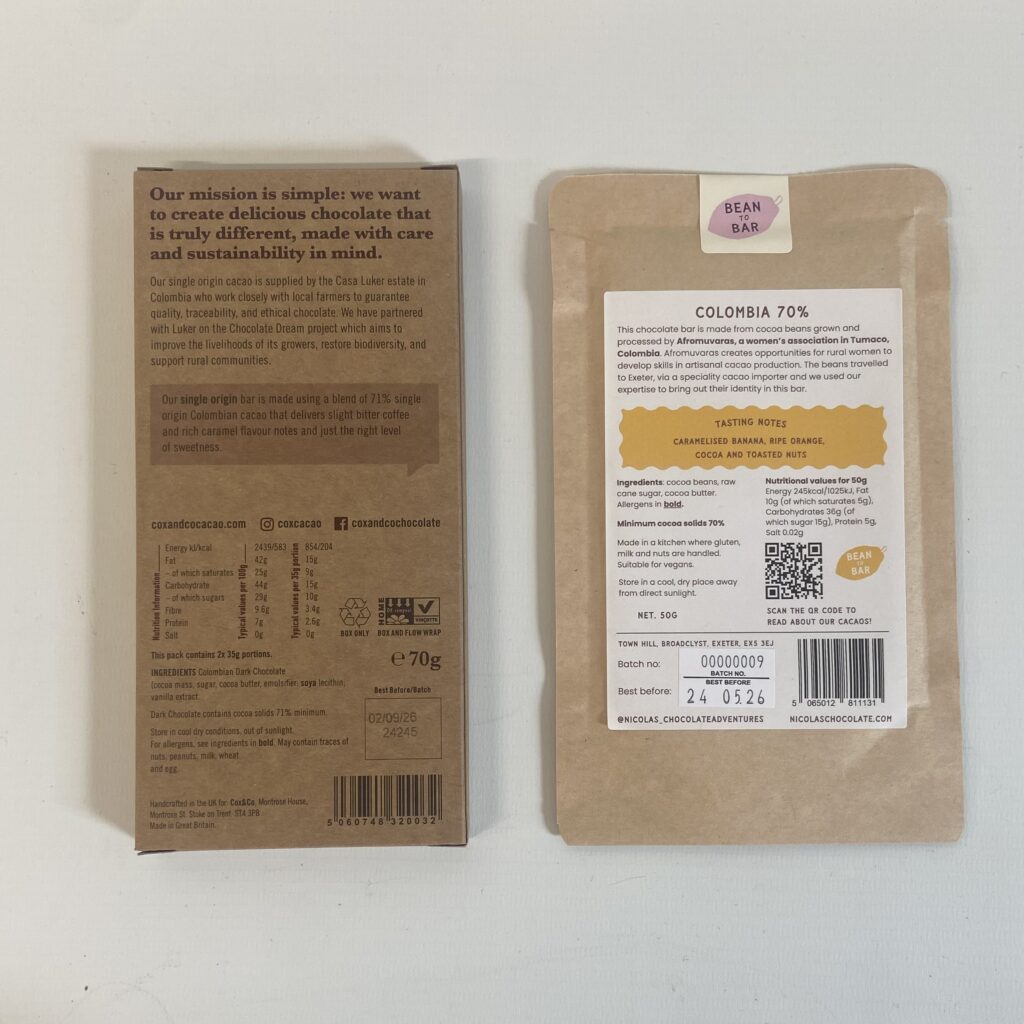
The 71% Colombian Cacao Single Origin Dark Chocolate from Cox & Co was purchased as part of a Mixed Bar Bundle (3 x 70g for £14), as it’s not available individually. My bar came from Batch 24245, with a best before date of 02.09.26.
The 70% Colombia Dark Chocolate from Nicola’s Chocolate was bought directly from her website at £5.65 for 50g. It came from Batch 00000009, with a best before date of 24.05.26.

Now let’s apply our three assessment criteria to evaluate the fineness of these chocolates: Taste, Transparency, and Craftsmanship. These aren’t just aesthetic categories, they reflect how much we really know about the cocoa beans and how they’ve been handled. For the purposes of this post, I’ll save taste for last, and begin with transparency.
This is where the gap between fine and fashionable chocolate widens. Both bars are made with Colombian cacao, but the level of transparency around that cacao, and how it is turned into chocolate, differs significantly.
Cox & Co 71% Colombia - “Farm to Bar Cacao”
Cox & Co claims its chocolate is made with farm to bar cacao supplied by Casa Luker in Colombia. While the packaging uses phrases like single origin, the “Casa Luker estate,” working with “local farmers” this is a broad simplification. Luker tell us that they purchase cacao from around 15,000 farmers across Colombia, drawing from multiple regions including Santander, Arauca, Huila, and Tumaco. In fact, Luker buys approximately 35% of Colombia’s cocoa production—more than 16,000 tons per month. No indication is given as to the genetics of the cacao or how the cacao is handled post-harvest we are just told it is a “blend” of Colombian cacao. The term “estate” could come from Granja Luker but this is a research and training facility and unlikely to be the origin of the cacao in the bar. So not a single estate bar, not even a single region bar, but the result of a national-scale supply network. (Luker Chocolate, n.d.)
As for the chocolate-making, it is described as “handcrafted in the UK for Cox & Co”. At least they are not claiming to make it, but you have to find the Montrose Ventures Ltd website to discover where the chocolate is produced and that Cox & Co is one of their brands. (THE DD Team, n.d.). So do Montrose Ventures Ltd make it from bean to bar then? They don't say. Videos and other public content focus on packaging, not chocolate production. So, the likelihood is that the finished couverture or semi-processed chocolate arrives from Luker and is then moulded and packed in the UK by Montrose.
So where is the transparency? In fine chocolate terms, the use of “farm-to-bar” refers to a chocolate maker who controls the entire farm to bar process from the farming of the cacao and post-harvest processes to the crafting from the raw beans to the finished bar, with full transparency. This is not the case here, all we know is that the cacao can be traced back to Luker’s supply chain in Colombia.
So, for Cox & Co there is no direct relationship between them and the farm or the process from farm to bar and they are not openly transparent about who actually makes the chocolate.
Nicola’s Chocolate, 70% Colombia – “Bean to Bar”
By contrast, Nicola’s transparency is integral to her brand. Her website and social media give detailed insights into the beans she uses,in this case, cocoa grown by Afromuvaras, a women’s association in Las Varas De Tumaco, Nariño, Colombia comprising 366 women who are improving lives in a region that has suffered the consequences of coca cultivation and trafficking. (Afromuvaras Association, 2025)
Nicola imports through “a specialist in fine cacao”. When asked directly who her importer was, she answered: Belco. There’s no supply chain opacity, just direct answers. Belco provides full post-harvest information—manual, selective harvest; fermentation in boxes; drying on raised beds, along with genetic classification (as far as possible). (Belco, n.d.)
Nicola roasts, stone-grinds, conches, and tempers the chocolate herself in her Exeter workshop. She regularly shares process photos and insights, and is open about ingredient sourcing, and even her own learning curve. Full Transparency not just traceability.
Cox & Co, 71% Colombia –“Handcrafted”?
Cox & Co describes its bars as “handcrafted in the UK,” but we also know that the facility producing these bars (Montrose Chocolate Ventures Ltd) reportedly has the capacity to make over 20,000 bars per day. So “handcrafted” is feeling a little more like marketing than reality. It's possible human hands are involved in moulding or packaging, but this isn’t small-batch, hands-on bean-to-bar chocolate-making. (THE DD Team, n.d.) I should point out that this is not a claim that Cox & Co make, but there are retailers who do it on their behalf. Connectionaffection.net in Stroud for example currently describe the Cox & Co 100% bar as “Small Batch, Bean to bar made cacao from the Luker Chocolate Estate” (Confection Affection, n.d.) - this is how AI rumours start!
By using a blend, Luker Chocolate is achieving a standardised flavour, essential for industrial and premium chocolate brands. As highlighted by The Chocolate Journalist, Luker excels at delivering consistency, which is crucial for large-scale chocolate production. (Chocolate Journalist, 2017) But this is flavour development in the industrial sense: controlled, efficient and replicable.
When we look at the ingredients, predictably, we see the use of vanilla extract to enhance the flavour: Dark Colombian Chocolate (cocoa mass, sugar, cocoa butter, emulsifier: soya lecithin, vanilla extract). It is pre-processed and remoulded chocolate with added flavour.
Nicola’s Chocolate, 70% Colombia – Small Batch, Start to Finish
Nicola’s approach couldn’t be more different. In her Exeter workshop, she makes chocolate from bean to bar, and her goal isn’t standardisation, it’s expression. She adjusts roast profiles and refining times based on the character of each batch, aiming to bring out the identity of the beans, not to standardise it.
The transparency in the sourcing, fermentation, and production is part of the craftsmanship too. It isn’t just ethical; it’s flavour-driven. Nicola communicates the sourcing information to show the care and respect involved in crafting natural flavours, as well as to honour the people whose skill and labour shape the cacao long before it reaches her.
The simplicity of the recipe places the full responsibility on the quality of the beans and the maker’s skill in bringing them to life.
Cox & Co 71% Colombia - A Treat
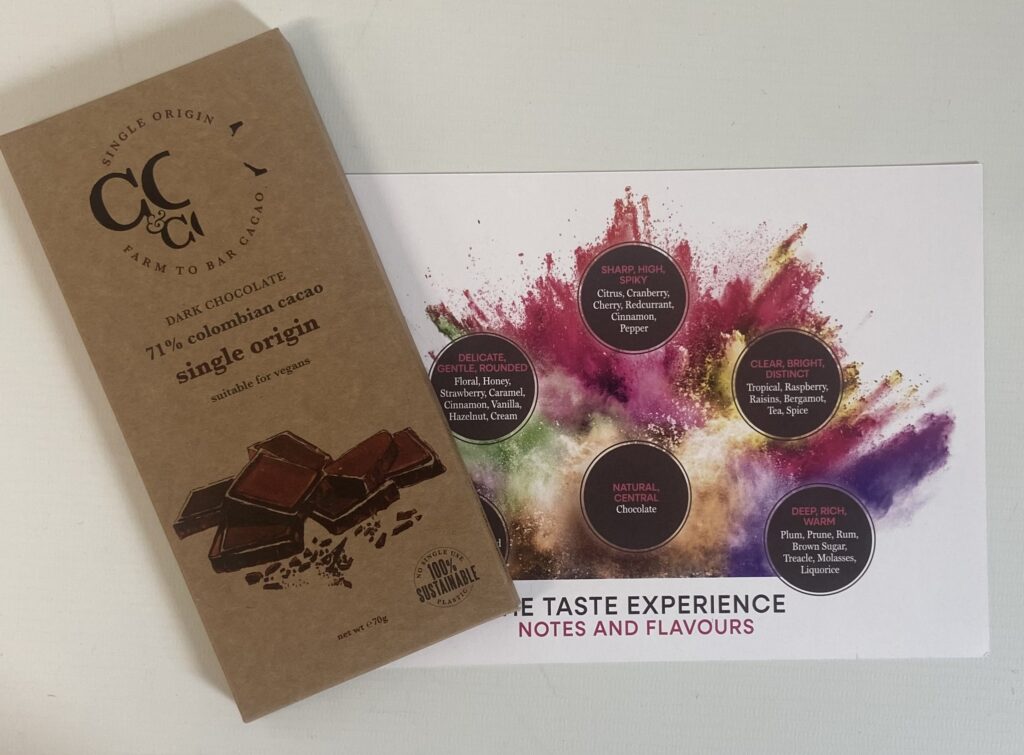
The bar promises “a slight bitter coffee and rich caramel flavour notes and just the right level of sweetness.”
The aroma was that familiar smell of vanilla with a slight off oil note. That said, I am approaching this bar as a trained taster, not everyone is going to smell first, they may just be going straight in for the munch! And to its credit, it tasted better than it smelled. The melt is even and pleasantly creamy at first. The vanilla delivers the promised sweetness, followed by an alkalised cocoa-powder note that might be interpreted as bitter coffee. The finish was a little dry with a metallic edge, but not aggressive. I wouldn’t choose to eat it myself, but it is safe, and familiar. That impression was confirmed when I offered it to a few people who aren’t used to fine chocolate—they found it 'not bad."
But while it delivers on approachability, it lacks complexity. The flavours are flat, one-dimensional, and ultimately unremarkable. Still, it’s well-executed for what Luker Chocolate aims to deliver: a premium chocolate.
Nicola’s Chocolate, 70% Colombia - A Taste Adventure
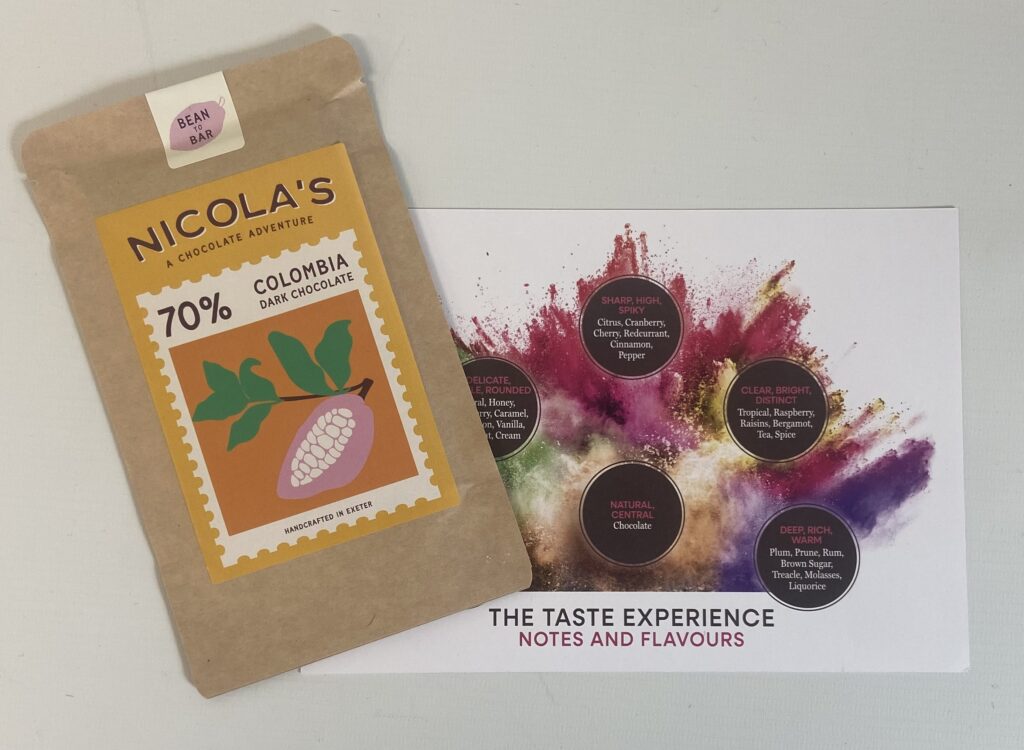
Nicola’s bar promises notes of caramelised banana, ripe orange, cocoa, and toasted nuts.
The aroma is inviting, deep chocolate with nutty undertones, hinting at what’s to come. On the palate, there’s an immediate hit of acidity—like fresh orange or even tangerine—the acidity mellows into banana and sweetens into banoffee pie. As the melt continues, the flavour shifts to toasted nuts and natural cocoa powder, before finishing with a return of that bright tang presented at the start.
This time the bar isn't just smooth, bitter, sweet and familiar, it delivers on flavour. It might be unfamiliar to someone used to mass-market chocolate, but to anyone curious about flavour or us bean geeks, it’s a lively, layered, and expressive experience.
The contrasting levels of transparency and craftsmanship between these two Colombian dark chocolate bars are ultimately confirmed by their taste.
The Cox & Co 71% Colombia is a plain bar positioned to appeal to conscious consumers, yet it remains part of a larger, more industrialised supply chain—albeit a traceable one, and better than many. The real issue here is the use of the phrase “farm to bar cacao”, which misleadingly suggests full transparency and control from origin to finished product. This bar's farm to bar story tells us more about marketing than transparency and flavour: fashionable rather than fine.
The Nicola’s Chocolate 70% Colombia on the other hand, is fine chocolate. Every stage from sourcing, to roasting and wrapping, is visible, intentional, and led by the maker herself. The taste reflects the beans, the people who grew them, and the skill that shaped them. It is complex, and the process behind it is bean-to-bar, small-scale, and honest.
So, is farm to bar better than bean to bar?
As I said at the start: it depends. Ultimately, transparency, craftsmanship, and taste are the best guides. Let them help you make up your own mind and find what you are really looking for in your chocolate.
Curious to learn how to identify genuinely fine and crafted chocolate? Explore my micro-learning course: An Appreciation of Fine Chocolate.
Afromuvaras Association, 2025. Mas Que Una Historia - Instagram. [Online]
Available at: https://www.instagram.com/afromuvaras_/?hl=en
[Accessed 1 August 2025].
Belco, n.d. Cacao de Mujeres. [Online]
Available at: https://www.belco.fr/cacaos/993000300100000/cacao-de-mujeres
[Accessed 1 August 2025].
Companies House, 2025. Fine and Update Company Information Service. [Online]
Available at: https://find-and-update.company-information.service.gov.uk/company/10859391/officers
Confection Affection, n.d. Cox & Co 100 dark Colombian Chocolate Bar. [Online]
Available at: https://www.confectionaffection.net/cox--co-100-dark-columbian-chocolate-bar-14366-p.asp
[Accessed 1 August 2025].
Cox & Co, n.d. Our Story. [Online]
Available at: https://coxandcocacao.com/pages/our-story
[Accessed 30 July 2025].
Journalist, T. C., 2017. Sustainability Colombian Fine Cacao. [Online]
Available at: https://www.thechocolatejournalist.com/blog/sustainability-colombian-fine-cacao
[Accessed 30 July 2025].
Luker Chocolate, 2024. The Chocolate Dream Progress Report 2024, s.l.: s.n.
Luker Chocolate, 2025. The Chocolate Dream. [Online]
Available at: https://lukerchocolate.com/en/sourcing-sustainability/the-chocolate-dream
Luker Chocolate, n.d. Sustainable Chocolate. [Online]
Available at: https://lukerchocolate.com/en/sustainable-chocolate
[Accessed 30 July 2025].
Myers, A., 2025. luker-chocolate-and-the-case-for-cocoa-trust. [Online]
Available at: https://cocoaradar.com/luker-chocolate-and-the-case-for-cocoa-trust/
[Accessed 1 August 2025].
Nicolas Chocolate, 2025. About Us. [Online]
Available at: https://www.nicolaschocolate.com/about-us
Nicola's Chocolate, 2025. About Us. [Online]
Available at: https://www.nicolaschocolate.com/about-us
[Accessed 1 August 2025].
THE DD Team, n.d. Our Story. [Online]
Available at: https://daniels-delight.myshopify.com/
[Accessed 30 July 2025].


